

The stunning Southeast Asian nation of the Philippines will host the maiden FIFA Futsal Women’s World Cup™ in 2025. Set against inspiring mountain ranges and the beautiful Pacific Ocean, the competition sees 16 teams from across all six confederations compete.
Known for its rich culture, diverse landscapes, and warm hospitality, the Philippines is a unique and fascinating destination for this tournament’s debut, giving fans much to get excited about both on and away from the futsal court.
The Philippines is a vibrant and diverse archipelago in Southeast Asia, consisting of over 7,600 islands and home to a population exceeding 110 million people. Known for its rich cultural heritage, warm hospitality, and dynamic cities, the country balances a deep respect for tradition with rapid modernization. Its tropical climate and natural beauty contribute to a lively outdoor and sports culture.
Economically, the Philippines is one of the fastest-growing economies in the region, with a youthful population and an increasing focus on education and development. Sports play a vital role in Filipino society, uniting communities and fostering national pride. The country has increasingly embraced women’s sports, particularly football and futsal, as part of its broader commitment to gender equality and youth empowerment.
With significant progress in grassroots sports development and strong institutional support, the Philippines stands as an inspiring example of a nation leveraging sport to empower its youth, especially girls, and to build a lasting legacy. This makes it an ideal and meaningful host for the Futsal Women’s World Cup 2025 draw event.
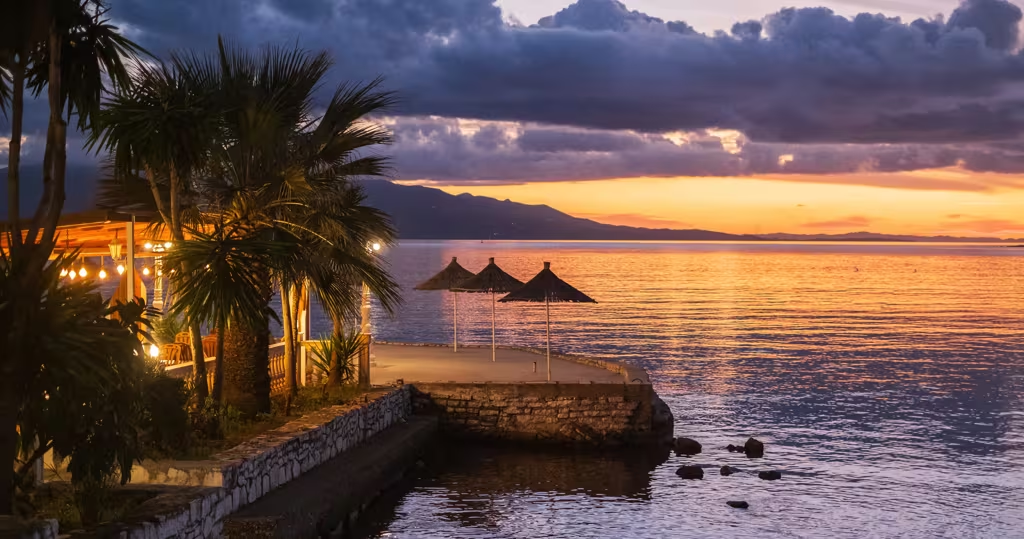
The Philippines is the perfect place to host the FIFA Futsal Women’s World Cup 2025. The country’s enthusiasm following its debut at the FIFA Women’s World Cup 2023 exemplifies a growing passion for women’s football and futsal. More importantly, the Philippines provides a compelling case study in the development of women’s futsal.
Since 2012, a collaborative school program organized by the Philippine Football Federation (PFF) and the Department of Education has integrated futsal into the physical education curriculum. This initiative has led to the registration of 30,000 female players, signaling strong grassroots growth.
Through a forward-looking legacy and development plan in partnership with FIFA, the country is investing in upgrading facilities, building player, coach, and referee capacity, and expanding both domestic and international playing opportunities.
With a population of over 110 million, the Philippines offers a unique opportunity to inspire children, especially girls, to embrace futsal not only as recreation but as a sport to pursue seriously. This initiative aims to increase futsal participation across all ages and genders while serving as a model for other FIFA member associations. The growth of futsal in the Philippines also aligns with FIFA’s strategic goal to grow the global female player base to 60 million by 2027.
Population: Over
110 Million
Number of registered female futsal players
Year futsal introduced
in schools
Host cities
for the event
The honor of hosting the tournament goes to Pasig City, a vibrant and forward-looking hub within Metro Manila, the Philippines’ bustling capital region. Once a historic riverside settlement, Pasig has evolved into a highly urbanized city of more than 800,000 residents, blending rich cultural heritage with modern infrastructure.
At the heart of the city lies Ortigas Center, one of Metro Manila’s premier business districts, filled with gleaming skyscrapers, shopping malls, and global enterprises. Yet Pasig retains its sense of community through historic landmarks such as the Pasig City Museum and the centuries-old Immaculate Conception Parish Church, as well as attractions like the Pasig Revolving Tower, which offers panoramic views of the metropolis.
Pasig is also recognized for its progressive governance and strong commitment to sports development. The city actively promotes youth and grassroots sports, making it a fitting stage for the first-ever FIFA Futsal Women’s World Cup 2025™ in the Philippines. With its world-class facilities, excellent accessibility, and enthusiastic local support, Pasig City is poised to welcome the world and set the tone for an unforgettable tournament.
From the moment you step off the plane, get ready to experience a country bursting with warmth, vibrant traditions, and genuine hospitality. Filipinos are known for their friendliness and smiles, expect to be greeted with kindness wherever you go. The Philippines is a melting pot of cultures, with deep respect for family values, community spirit, and heartfelt celebrations.
Embracing local customs will enrich your stay. You will enjoy the lively festivals, colorful street scenes, and tasty local food. Whether in the bustling urban pulse of Pasig City or the laid-back charm of Victorias City, the Filipino spirit of hospitality shines through.
Filipino cuisine is a feast for the senses, hearty, flavorful, and deeply rooted in a blend of indigenous, Spanish, Chinese, and American influences. Sharing meals is a ritual that brings people together here, perfectly mirroring the communal spirit that makes this tournament so special.
Some must-try dishes include:
For the adventurous, vibrant street foods like balut (fertilized duck egg), isaw (grilled chicken intestines), and kwek-kwek (battered quail eggs) offer a taste of authentic local life. These are beloved by locals and add to the authentic experience.
The flavors you encounter will tell stories of heritage, resilience, and celebration, just from bustling city streets to quiet coastal towns. Just like the tournament itself, your time here will be more than a competition, it will be a full sensory journey infused with the warmth and spirit of the Philippines.
Here’s what you need to know about the local money that will keep your day-to-day adventures going:
When you’re swapping currency or withdrawing cash, know that major cities and airports have numerous ATMs and currency exchange services. The peso is widely accepted, but it’s good to have some small notes and coins handy for markets, public transport, and street food.
For all your gadget and charging needs during the tournament:
If your plugs don’t match, you might need a travel adapter or converter, especially if coming from countries using different plug types (e.g., European or UK style). Power outlets are widely available in hotels, venues, and public areas, but carrying a small universal adapter is advisable. For any bulky or specialized electrical devices, confirm compatibility beforehand to avoid inconvenience.